

The Sea of Sameness: Why the Internet is Drowning in Repetition
Most creators aren't using AI to think—they're using it to replace thinking. Learn the difference between automated noise and systemic originality.
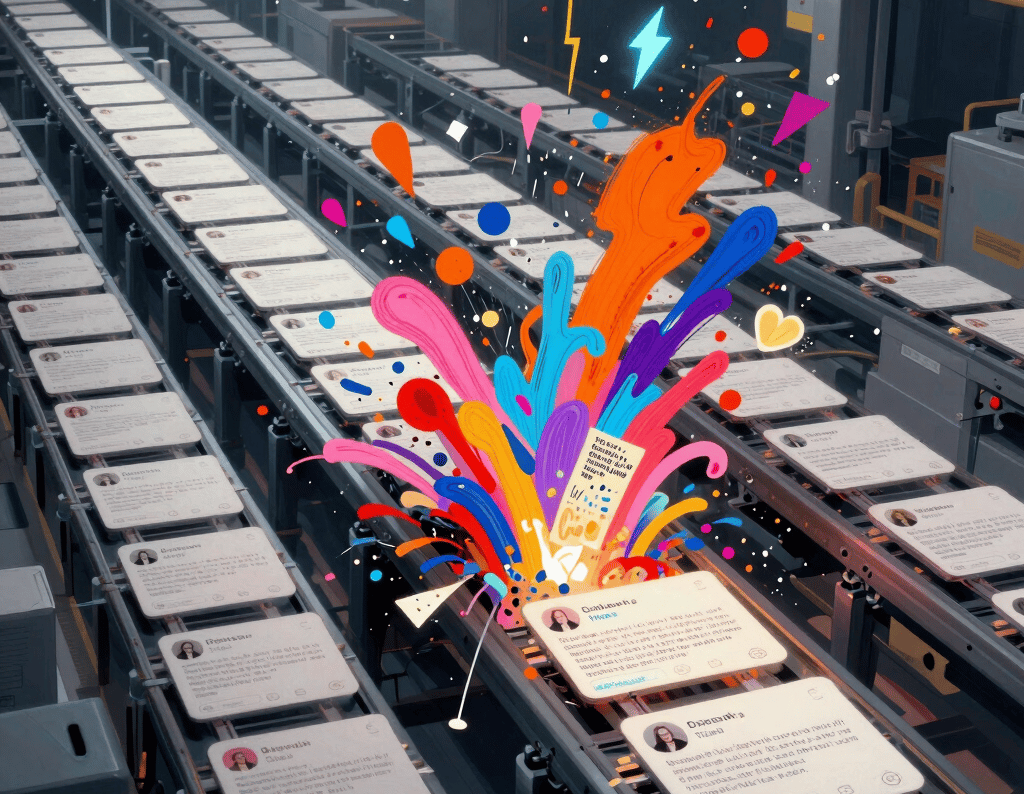
Scroll through almost any platform today and you’ll notice a pattern.
The same hooks.
The same formatting.
The same opinions, recycled and rewritten.
A lot of content doesn’t feel human anymore.
It feels assembled.
The Real Problem
AI isn’t the problem.
The problem is how people use it.
Most creators now use AI to replace thinking instead of supporting it.
Instead of sharing original perspectives, they generate echoes of what already exists.
That’s why so much content feels forgettable the moment you scroll past it.
Not because it’s badly written.
But because there’s nothing real underneath the surface.
Why Originality Disappears
When creators feel pressure to constantly post, speed becomes more important than depth.
And when speed becomes the priority, people naturally move toward:
recycled ideas
familiar structures
trending opinions
safe content
Over time, everyone slowly starts sounding the same.
It isn’t intentional.
It’s just efficient.
The Great Divide
There is a major difference between two types of creators:
Those who use AI to think for them.
Those who use systems to distribute their ideas more effectively.
That difference changes everything.
A machine can help organize, structure, or expand an idea.
But the actual insight still needs to come from a real person with real observations.
That’s the part audiences still connect with.
What Actually Scales
The creators who stand out long-term usually aren’t the loudest.
They are the clearest.
They develop strong ideas first, then build systems around those ideas to distribute them consistently without losing their voice in the process.
That is the shift.
Not replacing originality—protecting it.
Final Thought
The internet probably doesn’t need more content.
It needs more perspective.
Because in a world full of repeated noise, people still remember creators who sound real.